Acoustic & Contact Diagnostics
Listen beyond the surface.
Explore sound, vibration and local contact as evidence for inspection.
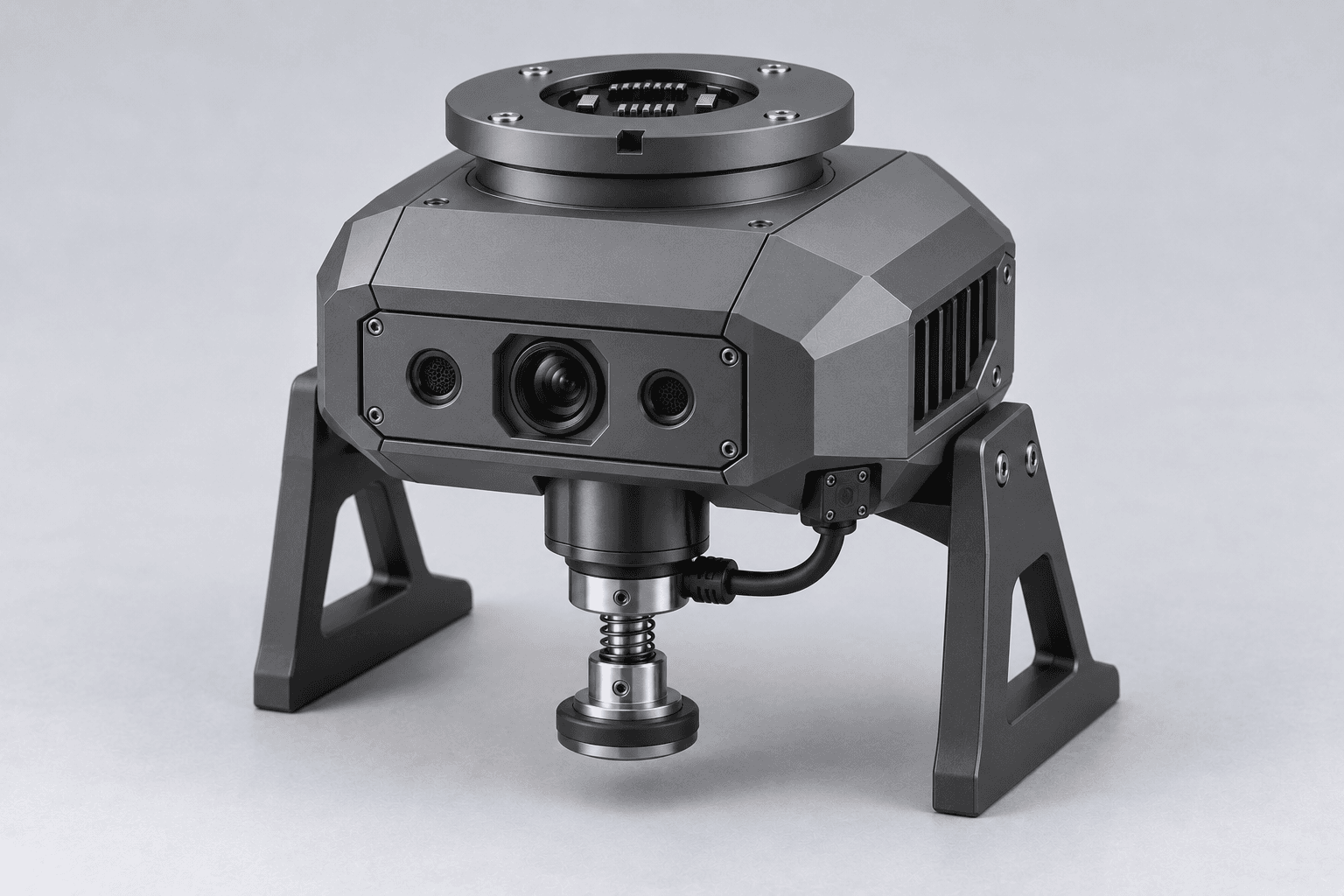
A tool with a defined role
Locate
Sense
Compare
The task
Assets with an acoustic, vibration or contact inspection question.
The intended result
A traceable signal for an engineer to interpret.
Keep a decision connected to its evidence
Source evidence
Files, observations and annotations
Human review
Advice, comments and decisions
Task record
History, linked evidence and report
The action is part of a record
Relate the task, human confirmation and observed result. The tool direction is developed alongside a workflow that can be reviewed.
Integration to discuss
Interface, power, mass and control integration need to be agreed and validated for the intended platform and task.
Acoustic & Contact Diagnostics
A reading needs a known contact condition
Probe pressure, angle and surface preparation can change a signal even when the material stays the same. A useful experiment holds those factors apart. Diagnostics research should document how contact was made, so variation in the reading can be investigated rather than immediately labelled a defect.
For a first discussion, identify the material, access surface and reference specimen, together with the inspection method you already use. Those inputs help choose the probe and bench arrangement. An aerial carrier would introduce further motion and contact loads that need a separate evaluation.