Emergency Support
Support the people on the ground.
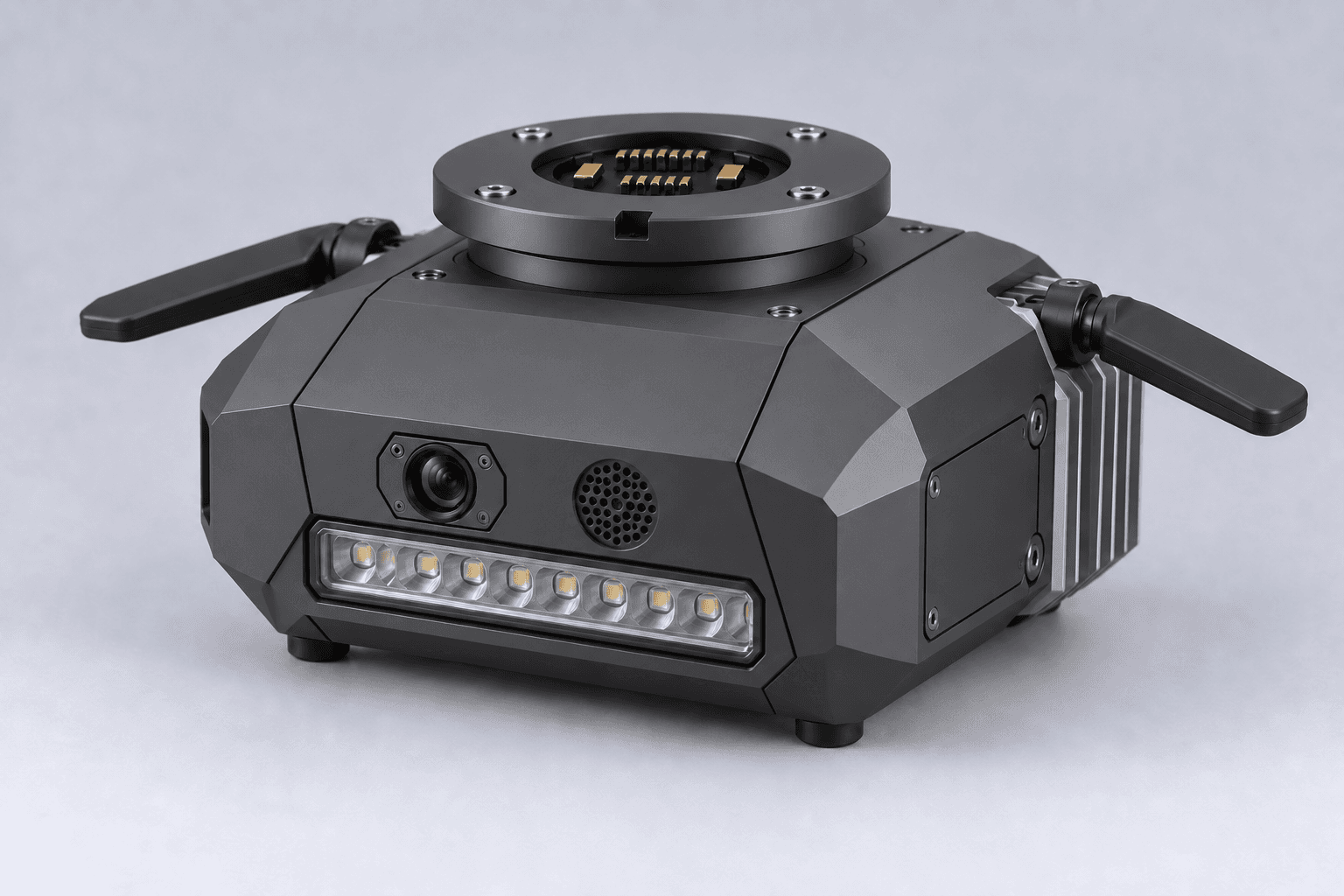
A tool with a defined role
Explore lighting, communications and observation support with professional teams.
The task
A professionally defined support task and command structure.
The intended result
Useful support information under human direction.
Coordinate
Support
Report
Keep a decision connected to its evidence
Source evidence
Files, observations and annotations
Human review
Advice, comments and decisions
Task record
History, linked evidence and report
The action is part of a record
Relate the task, human confirmation and observed result. The tool direction is developed alongside a workflow that can be reviewed.
Integration to discuss
Interface, power, mass and control integration need to be agreed and validated for the intended platform and task.
Emergency Support
Give people a clear understanding of what is available
Lighting, audible guidance and a communication link serve different needs. Their usefulness depends on direction, visibility, heat and local conditions. The emergency-support direction studies how those states can be understood by the people using them, rather than treating a powered indicator as completed support.
A professional workflow, intended users and an operating environment are needed to frame a useful trial. The module may support a defined step within that workflow. It does not replace emergency judgment, and link performance or visibility must be measured for the proposed deployment.