Cleaning & Recovery
Leave a clearer result.
Explore local cleaning, debris retrieval and lightweight collection.
Define the scope together
The task
Defined debris or a bounded area requiring cleaning.
The intended result
Retrieved material and a before-and-after observation.
Keep a decision connected to its evidence
Source evidence
Files, observations and annotations
Human review
Advice, comments and decisions
Task record
History, linked evidence and report
Inspect
Recover
Compare
The action is part of a record
Relate the task, human confirmation and observed result. The tool direction is developed alongside a workflow that can be reviewed.
Integration to discuss
Interface, power, mass and control integration need to be agreed and validated for the intended platform and task.
Cleaning & Recovery
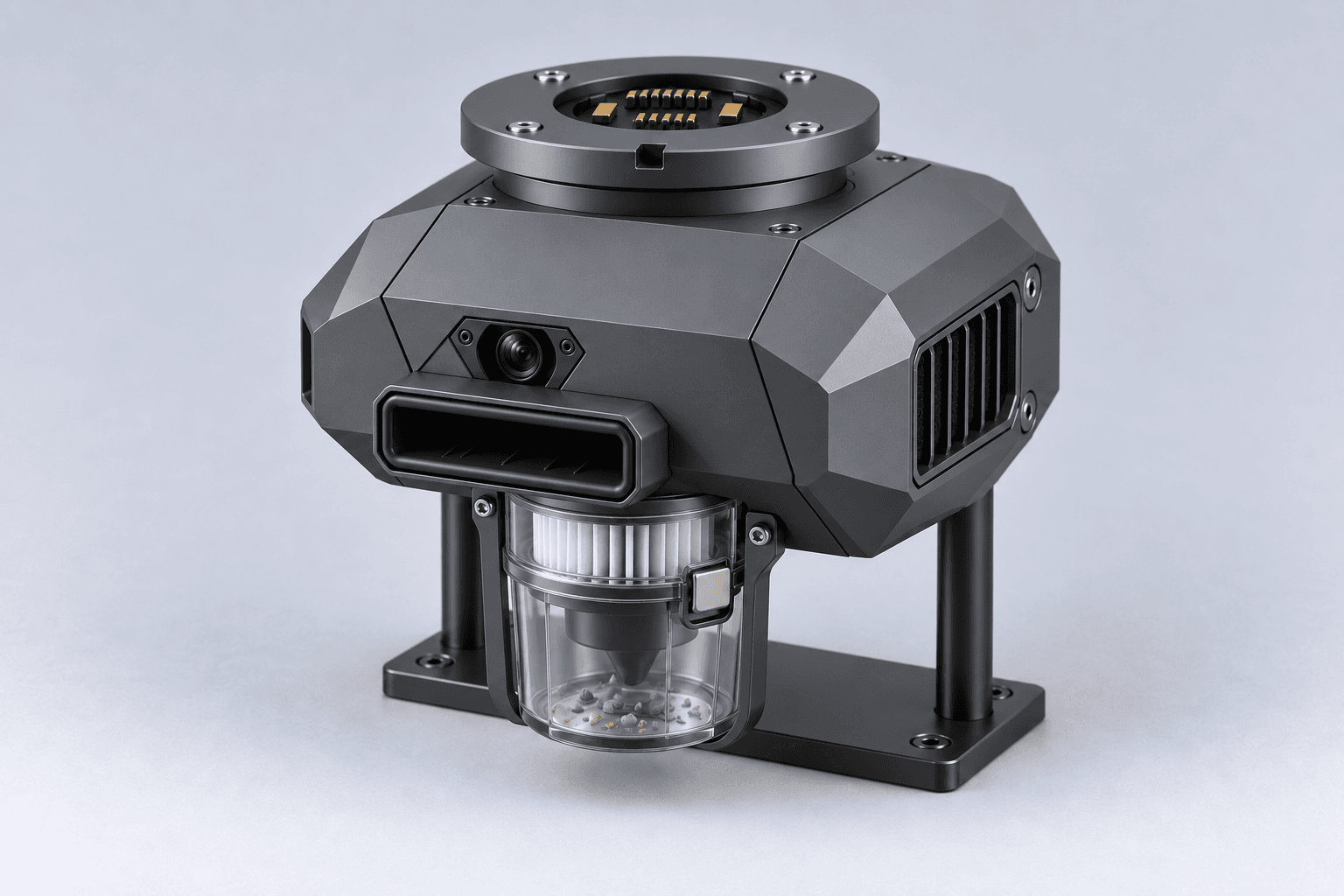
Follow the material all the way into the container
Material disappearing from a surface does not establish that it reached the collection container. Some may remain in the inlet or filter, and blockage changes the airflow. Recovery research should compare the initial material, the retained amount and the residue along the path.
Define the material, particle size, surface and permitted cleaning method for an initial trial. These affect the inlet, filter and maintenance access. Hazardous dust or unknown contaminants require their own handling assessment and should not be treated as ordinary demonstration material.